
Have you been working on your website for months but still not seeing your pages rank on Google? Do you feel like you are putting in effort but getting little traffic, fewer leads, and almost no sales? Or maybe you wonder why your competitors keep showing up on top even though your content looks just as good.
The truth is, most websites fail to perform because of simple mistakes. From keyword stuffing and duplicate content to slow site speed and poor internal linking, these errors hold back your rankings without you even realizing it. Learning the common SEO mistakes to avoid is just as important as learning SEO best practices.
In this guide, I will walk you through the most common on-page SEO mistakes to avoid, the technical slip-ups that silently kill rankings, and the common mistakes to avoid in local SEO that cost businesses valuable customers. By the end, you will know how to avoid common SEO mistakes and build a strategy that actually works.
Along the way, I will also show you how SEO connects with strong web design, smart Google Ads and PPC campaigns, and effective social media marketing to give your business a complete growth system.
What Are the Most Common SEO Mistakes to Avoid?
When it comes to ranking higher on Google, avoiding mistakes is just as important as following best practices. Many businesses pour time and money into SEO but still struggle because they fall into the same traps over and over again.
Let’s look at some of the most common SEO mistakes to avoid so your website does not lose valuable traffic.
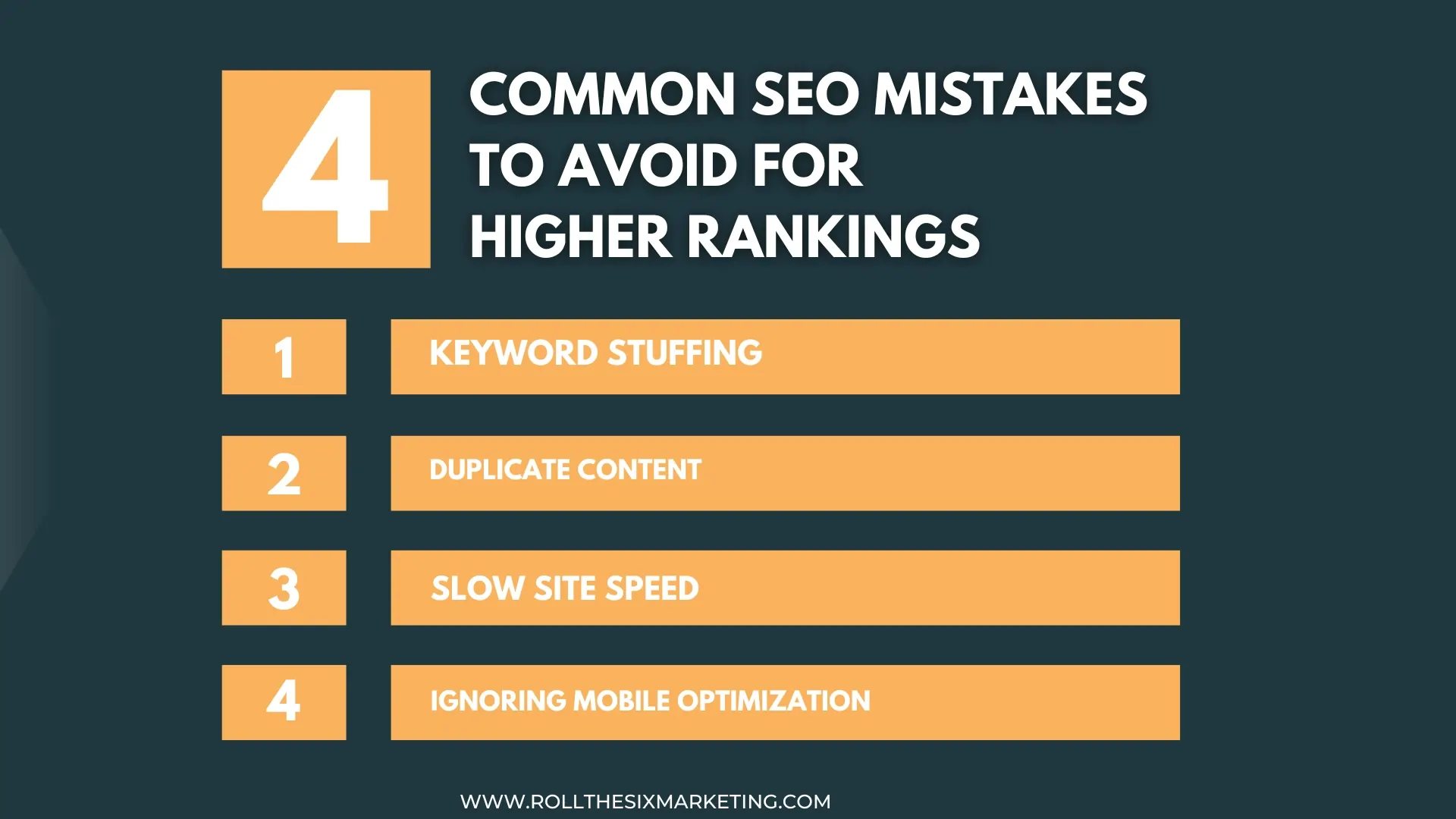
Keyword Stuffing
This happens when a keyword is used too many times in a piece of content. It makes your writing look unnatural and hurts the user experience. Google’s algorithm is smart enough to detect this, and instead of boosting your ranking, keyword stuffing can actually push your page down. Focus on writing for people first, then add keywords naturally.
Duplicate Content
Having the same or very similar content on multiple pages confuses search engines. Duplicate content can stop your pages from ranking altogether. This mistake often happens with product descriptions, blog posts copied from other sites, or repeating the same text across local SEO landing pages.
Always create unique, fresh, and valuable content that speaks directly to your audience.
Site Speed Issues
A slow website is one of the biggest SEO killers. If your site takes more than a few seconds to load, people will leave, and search engines notice this behavior. Oversized images, too many plugins, or poor hosting can all cause slow site speed. Optimizing images, using caching, and working with a clean web design can solve most of these problems.
Missing or Poor Meta Tags
Title tags and meta descriptions are simple but powerful SEO elements. Many websites skip them, write them too long, or forget to include keywords. Missing or poorly written meta tags make your site invisible in search results. Always write unique titles and meta descriptions that clearly explain the page and encourage clicks.
Ignoring Mobile Optimization
Most people browse on mobile, and if your site is not mobile friendly, you are losing both traffic and rankings. Google has moved to mobile-first indexing, which means your mobile site is the primary version Google looks at. Make sure your design is responsive and works smoothly on all devices.
Ineffective Internal Linking
Internal links guide users and search engines through your website. A lack of internal linking, or using generic anchor text like “click here,” is a missed opportunity. Smart internal linking connects your blogs, service pages, and landing pages in a way that spreads authority and helps users find more content.
For example, linking from your blog about SEO mistakes to your Google Ads and PPC campaigns page adds context and improves the journey.
Backlink Blunders
Backlinks are one of the strongest ranking factors, but not all links are good. Buying spammy backlinks, joining link farms, or ignoring link building completely can harm your site. Instead, focus on building high-quality links from relevant and trustworthy sources. Guest posts, partnerships, and valuable content are safer ways to earn links.
Ignoring HTTPS Security
Sites that do not use HTTPS are marked as “not secure” by browsers, which hurts trust and rankings. Adding an SSL certificate is quick, affordable, and essential for SEO today.
Common On-Page SEO Mistakes to Avoid
On-page SEO is where you have the most control, but it is also where people make the most mistakes. These issues might seem small at first, but when added together, they can stop your site from ranking well. Here are the most common on-page SEO mistakes to avoid.
Thin or Outdated Content
Search engines reward pages that provide real value. If your content is too short, outdated, or written without user intent in mind, it is unlikely to rank. Content that feels like filler, or is not updated regularly, signals to Google that your site is not a reliable source.
Treat every blog, service page, or landing page as a chance to solve a problem for your audience.
Missing Title Tags and Meta Descriptions
This is one of the simplest SEO mistakes, yet it happens often. A missing or duplicate title tag confuses search engines, and a weak meta description fails to attract clicks. Always write unique titles and descriptions that include your target keywords.
For example, if you are targeting “common on-page SEO mistakes to avoid,” make sure that exact phrase appears naturally in your meta.
Poor Use of Headings
Headings (H1, H2, H3) make content easier to read and help search engines understand your page structure. Many websites either skip headings, overuse H1s, or write vague headings that do not include keywords. Organize your content with clear headings, use your main keyword in the H1, and keep each subheading specific.
Unoptimized Images
Oversized images slow down site speed, which directly affects SEO. Another common mistake is forgetting to add alt text, which not only helps with rankings but also improves accessibility for users with screen readers. Every image on your site should have a descriptive file name and alt text that supports your content.
Ineffective Internal Linking
Internal links are a simple way to spread authority across your website, but many businesses either do not use them at all or use generic phrases like “learn more.” Instead, use descriptive anchor text and link to relevant services like SEO, web design, or Google Ads and PPC campaigns.
This helps users find more information and keeps them engaged on your site.
Keyword Stuffing and Unnatural Keywords
Trying to force keywords into every sentence is a classic SEO mistake. It makes content look awkward and unreadable. Google wants natural, conversational content that flows. Use your keywords a few times where they fit naturally, and focus on writing for people, not just search engines.
Unoptimized URL Slugs
A long or messy URL full of random numbers does not help anyone. An optimized slug should be short, clear, and include your target keyword. For example, use /common-seo-mistakes instead of /blog/article?id=1234.
Common Local SEO Mistakes to Avoid
If you run a local business, ranking in your area is one of the most valuable things SEO can do for you. Still, I often see businesses making the same mistakes that hurt their visibility. Let’s break down the common local SEO mistakes to avoid so your business can get found by the right people.
Inconsistent NAP Information
NAP stands for Name, Address, and Phone number. If these details are not consistent across your website, Google Business Profile, and online directories, search engines may not trust your business. Something as small as a different phone format or spelling variation can confuse both Google and your customers.
Ignoring Google Business Profile Optimization
Your Google Business Profile is like your digital storefront. Many businesses forget to update it with photos, reviews, or correct business hours. This is a huge missed opportunity because Google uses these signals to decide which businesses show up in local search results and on Maps.
Overlooking Local Citations
Local citations are mentions of your business details across the web. If you are not listed in important local directories, you are missing out on backlinks and signals that boost trust. On the flip side, having duplicate or incorrect listings can hurt your rankings.
Using Generic or Duplicate Local Pages
Some businesses try to create location pages but copy the same text for every city. This duplicate content makes it harder for those pages to rank. Each local page should have unique content that speaks to the specific area and audience you want to target.
Forgetting Location Keywords
A lot of businesses write content but forget to add location based keywords. For example, instead of just writing about “plumbing services,” a local business should use “plumbing services in Miami.” This small change makes a big difference for local search visibility.
Why Avoiding Local SEO Mistakes Matters
Local SEO is how you show up when people nearby search for what you offer. By learning the common SEO mistakes to avoid in local optimization, you make sure your business gets found before your competitors.
Strong local SEO also supports your overall marketing strategy and works hand in hand with social media marketing and Google Ads and PPC campaigns to drive both online and offline results.
Common SEO Mistakes with Technical Optimization
Even if your content is great, technical mistakes can quietly block your site from ranking. Technical SEO is what allows search engines to crawl, index, and understand your website. Here are the most common SEO mistakes to avoid on the technical side.
Slow Site Speed
A slow website is one of the biggest turn-offs for users. If your pages take too long to load, visitors leave, and Google notices. Oversized images, too many plugins, or poor hosting often cause speed problems. Fixing this improves both rankings and user experience.
Lack of Mobile Optimization
With most searches happening on mobile, ignoring mobile friendliness is a costly mistake. Google uses mobile-first indexing, which means it checks the mobile version of your site first. If your layout breaks or pages are hard to use on a phone, your rankings will suffer.
Poor Use of Robots.txt
The robots.txt file tells search engines which parts of your site they can or cannot crawl. A common mistake is blocking important pages by accident. Another mistake is not using it at all, leaving crawl budgets wasted on unimportant pages.
No XML Sitemap
A sitemap helps search engines understand your website’s structure. Many businesses forget to create or submit one in Google Search Console. Without it, some pages may not get indexed at all.
Ignoring HTTPS Security
Still running on HTTP? That is a mistake. Google favors secure websites, and users trust them more. An SSL certificate is cheap and shows both search engines and customers that your site is safe.
Oversized or Unoptimized Images
Images that are too large slow down your site. Forgetting to compress images or skipping alt text is another common issue. Optimized images load faster, improve accessibility, and can even show up in Google Image Search for extra traffic.
How to Avoid Common SEO Mistakes
Now that you know the errors holding websites back, let’s look at how to avoid common SEO mistakes and start building a stronger strategy. Fixing these issues does not always require huge budgets but consistent effort and the right tools.
Run Regular Site Audits
One of the easiest ways to spot mistakes is by running site audits. Tools like Google Search Console, Ahrefs, or SEMrush highlight problems such as duplicate content, crawl errors, missing meta tags, and slow site speed. A quick monthly check can save you from bigger issues later.
Use Analytics to Track Performance
Not using analytics is a mistake many businesses make. Google Analytics and Search Console give you insights into which pages are working, what keywords are driving traffic, and where users are dropping off. By checking these reports, you can make data-driven improvements.
Secure Your Website with HTTPS
If your site is still running on HTTP, it is time to upgrade. Google favors secure websites, and visitors trust them more. An SSL certificate is affordable and instantly improves your credibility.
Optimize Content and Images
Content should be written for users first, search engines second. Avoid keyword stuffing, update outdated blogs, and make sure each page solves a problem or answers a question. Images should always be optimized with proper file sizes and alt text so they do not slow down your site.
Build Quality Backlinks
Ignoring link building is one of the most common SEO mistakes to avoid. Backlinks are like votes of confidence from other websites. Instead of buying cheap links, focus on guest posting, partnerships, and creating valuable content that earns links naturally.
Combine SEO with Other Strategies
SEO works best when it is part of a bigger picture. Strong web design improves user experience, Google Ads and PPC campaigns give you instant visibility, and social media marketing keeps your audience engaged. When these strategies work together, your chances of ranking and converting improve massively.
Final Thoughts on Common SEO Mistakes to Avoid
At this point, you know the most common SEO mistakes to avoid and how they can quietly hold back your rankings. From keyword stuffing and duplicate content to slow site speed and weak link building, even small errors can cost you valuable traffic and leads.
The good news is that these mistakes are easy to fix once you spot them. Focus on writing content for people, improving your technical setup, optimizing images, and using analytics to guide your next steps. Strong on-page SEO, reliable local SEO, and consistent link building will push your site ahead of competitors.
Most importantly, SEO works best when it is part of a bigger plan. A clean and user friendly web design, well-targeted Google Ads and PPC campaigns, and consistent social media marketing all work together with SEO to grow your business online.
If you want lasting results, remember this: SEO is not about shortcuts. It is about avoiding mistakes, staying consistent, and building a strategy that works over time. By keeping these points in mind, you give your website the best chance to rank higher, attract the right visitors, and turn them into loyal customers.
Frequently Asked Questions (FAQ)
What are some common SEO mistakes to avoid?
Some of the most common SEO mistakes to avoid include keyword stuffing, duplicate content, slow site speed, poor internal linking, missing meta tags, and ignoring mobile optimization.
What are the common SEO mistakes to avoid in local SEO?
In local SEO, the biggest mistakes are inconsistent NAP details, ignoring your Google Business Profile, skipping local citations, and using duplicate or generic local content.
How can I avoid common SEO mistakes as a beginner?
The best way to avoid common SEO mistakes is to run regular audits, optimize content for users, use HTTPS, compress images, and keep your content updated. Combining SEO with Google Ads and PPC campaigns or social media marketing gives you even stronger results.
What are the most common SEO mistakes businesses make?
Businesses often fall into mistakes like ignoring technical SEO, buying spammy backlinks, publishing thin content, forgetting alt text, or not optimizing for mobile.
What are the 3 C’s of SEO?
The 3 C’s of SEO are Content, Code, and Credibility. Great content attracts users, clean code helps search engines understand your site, and credibility (through backlinks and trust signals) builds authority.
What are the 4 types of SEO?
The 4 main types of SEO are On-page SEO, Off-page SEO, Technical SEO, and Local SEO. Each plays a unique role in boosting visibility and should be part of a complete strategy.
Which techniques should be avoided in SEO?
Avoid black hat tactics such as keyword stuffing, hidden text, cloaking, link farming, and duplicate content. These might work for a short time but usually lead to penalties that kill rankings.
What is the golden triangle of SEO?
The golden triangle refers to the area on Google search results where users focus their attention. It is the top left portion of the page that includes the first few organic results. Ranking here usually brings the most clicks.
Which keyword is best for SEO?
The best keyword for SEO depends on your business and audience. Focus on keywords with good search volume, low competition, and clear user intent. Using long-tail keywords is often more effective because they bring highly targeted traffic.
